
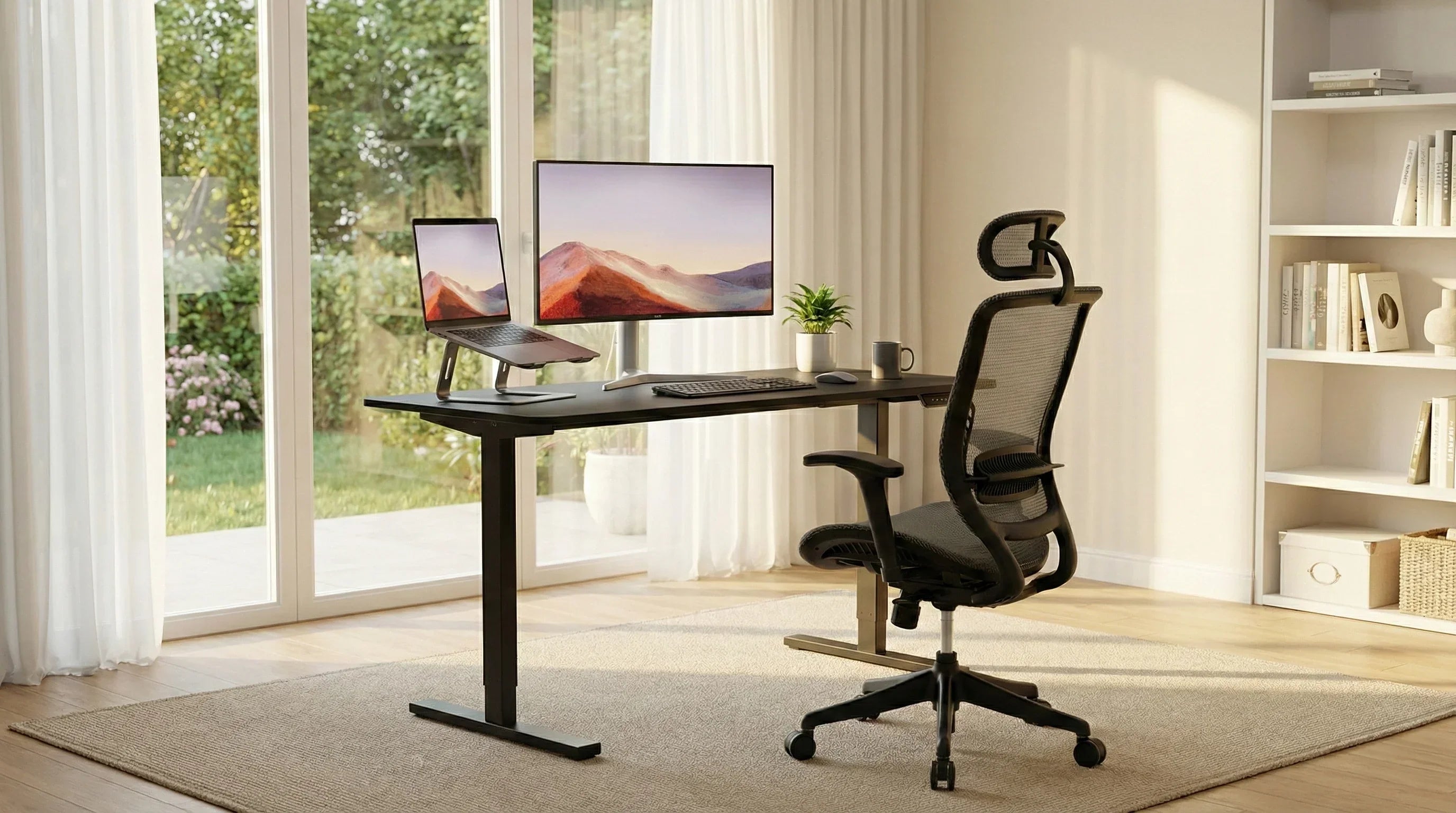
What Procurement Managers Should Know Before Buying Office Chairs in Bulk
Procurement managers buying office chairs in bulk need to evaluate five critical factors before committing to an order: total cost of ownership, ergonomic compliance, warranty terms, lead times, and supplier reliability, and getting any one of these wrong can result in costly replacements, staff health complaints, and project delays. This guide answers the most common questions procurement teams in Singapore ask when sourcing office chairs at scale.
Why Does Bulk Chair Procurement Require a Different Approach Than Standard Purchasing?
Buying 50, 100, or 500 chairs is not simply a larger version of buying one chair. At volume, every decision is amplified. A poor ergonomic choice affects an entire workforce. A weak warranty clause means absorbing repair costs across hundreds of units. A supplier without logistics infrastructure means delayed fit-outs and stalled office openings. According to a study published in Applied Ergonomics, poorly designed seating contributes to musculoskeletal disorders in up to 50% of office workers, making chair selection a direct occupational health decision, not just a facilities management task. In Singapore, where office-based industries employ a significant proportion of the workforce, this is a measurable business risk.
FAQ: Bulk Office Chair Procurement in Singapore
1. How Should Procurement Managers Approach Budget Planning for Bulk Chair Orders?
Budget planning for bulk seating should account for more than the unit price. Factor in:
- Unit cost vs. total cost of ownership — a chair priced at $150 with a 1-year warranty may cost more over five years than a $300 chair with a 5-year warranty and replaceable parts.
- Volume discount thresholds — most suppliers, including Serone Asia, offer tiered pricing that reduces per-unit cost as order quantity increases. Request a formal quotation at different quantity brackets (e.g., 50, 100, 200+ units).
- Ancillary costs — delivery, installation, disposal of old furniture, and any reconfigurations to accommodate new chair dimensions should be included in your total project budget.
- Contingency stock — ordering 5–10% above your immediate requirement protects against damage in transit and provides spares for future staff additions without triggering a new procurement cycle.
In Singapore's competitive commercial fit-out market, procurement managers who lock in bulk pricing early in a project often avoid cost escalations tied to supply chain fluctuations.
2. What Ergonomic Standards Should Chairs Meet for a Commercial Office Environment?
For corporate environments in Singapore, procurement managers should look for chairs that meet or reference the following:
- BIFMA (Business and Institutional Furniture Manufacturers Association) standards — the internationally recognised benchmark for commercial seating durability and safety.
- Adjustable lumbar support — essential for preventing lower back strain during extended seated work.
-
Seat height range — should accommodate the range of user heights in your workforce (typically 400–520mm seat height for standard desks).
- Armrest adjustability — height-adjustable armrests reduce shoulder and neck load.
- Breathable materials — particularly relevant in Singapore's humid climate, where mesh backrests improve thermal comfort and reduce fatigue.
- Weight capacity ratings — ensure the chair's rated capacity covers the full range of your workforce.
Procurement managers sourcing through Serone Asia can request full ergonomic specification sheets for each model, enabling direct comparison against your organisation's occupational health requirements.
3. What Warranty Terms Should Procurement Managers Negotiate?
Warranty terms for bulk orders should be explicitly stated in writing before any purchase order is raised. Key questions to ask:
- What is the warranty period? A minimum of 2 years is standard for commercial-grade seating. 5-year warranties on the frame and mechanism are available on higher-specification models.
- What does the warranty cover? Frame, mechanism, foam degradation, and fabric/mesh wear should all be addressed separately.
- Is on-site repair included, or is return-to-warehouse required? For large Singapore offices, on-site servicing is a significant operational advantage.
- Are spare parts stocked locally? Parts availability in Singapore determines how quickly warranty claims are resolved.
A warranty clause that looks strong on paper but requires international shipping of components is functionally weak for Singapore-based buyers.
4. What Delivery Timelines Should Procurement Managers Plan Around?
Delivery timelines vary significantly based on whether chairs are in-stock locally or sourced on order. For bulk procurement in Singapore:
- In-stock orders: Typically 3–10 business days for delivery and installation coordination
- Made-to-order or imported stock: Lead times of 6–12 weeks are common, particularly for custom colours, materials, or high-volume orders exceeding available local inventory.
- Staged deliveries: For large fit-outs, phased delivery aligned to your office handover schedule reduces storage requirements on-site.
Procurement managers should build a minimum 4-week buffer into project timelines to accommodate any customs, logistics, or quality inspection delays. Serone Asia maintains local warehouse stock in Singapore, which significantly reduces lead times for standard bulk orders.
5. How Should Procurement Managers Compare Office Chair Vendors in Singapore?
| Criteria | What to Verify |
| Product range | Does the supplier offer multiple ergonomic grades to match different user needs? |
| Minimum order quantities | Are MOQs aligned with your project scale? |
| Warranty and after-sales | Is local servicing available in Singapore? |
| References | Can the supplier provide verifiable corporate or commercial fit-out references? |
| Logistics capability | Do they manage delivery and installation directly? |
| Pricing transparency | Are volume discount structures clearly documented? |
Procurement managers should request a formal written quotation, product samples where possible, and a clear statement of lead times before awarding any bulk order.
Share:
Bulk Ergonomic Office Chairs for Businesses: Top Picks
Where to Buy Office Chairs in Bulk in Singapore: A Procurement Manager's Guide (2026)